
A high-quality mining vibrating screen mesh is the technical baseline for achieving a 95% mineral recovery rate in modern processing plants. Industry data from 2025 indicates that improper mesh selection leads to a 12% increase in energy waste due to excessive recirculating loads. Maintaining an aperture precision within ±0.05mm prevents the contamination of fine concentrates, while specialized alloys like 12% manganese steel extend service life by 300% in high-impact environments. These mechanical components ensure the consistent throughput of 500+ tons per hour, protecting downstream crushers from oversized debris and maximizing the economic output of the entire circuit.
In the global mineral sector, the separation stage determines the final grade of the ore concentrate. Statistics from 2024 operations show that plants using precision-engineered mining vibrating screen mesh solutions reduced their "near-size" particle errors by 14% compared to standard wire.
This reduction in sizing errors directly prevents the overloading of secondary crushers which are designed to handle specific volumetric flows. When a screen surface fails to pass correctly sized material, the return conveyor volume often spikes by 20%, causing premature mechanical fatigue in the gearbox.
Technical reports from Australian iron ore sites demonstrate that maintaining a strict 40% open area on the screen deck keeps the bed depth at an optimal 55mm. This specific depth allows gravity to pull smaller particles through the mesh before the material reaches the discharge lip.
As the material bed moves across the screen at speeds of 1.2 meters per second, the physical durability of the mesh wire becomes the primary constraint on uptime. Standard carbon steel wires lose approximately 1mm of thickness for every 150,000 tons of abrasive granite processed.
To combat this thinning, many copper mines in Arizona transitioned in 2023 to high-tensile stainless steel with a Cr-Ni content exceeding 18%. This chemical composition resists the micro-corrosion caused by 8.5 pH process water, which typically accelerates surface pitting by 35% in untreated metals.
| Mesh Material | Tensile Strength (MPa) | Recommended Ore Type | Expected Life (Weeks) |
| High-Tensile Steel | 1250 - 1400 | Hard Rock / Granite | 3 - 5 |
| Manganese Alloy | 1100 - 1300 | High Impact Iron Ore | 8 - 12 |
| Polyurethane | 35 - 55 (Hardness) | Fine Wet Sand/Slurry | 20 - 24 |
Longevity in these materials is measured by the "aperture growth rate," which must stay below 2% over the first 500 hours of vibration. If the holes expand too quickly, the sizing accuracy fails, and the plant must stop for a manual screen change that costs roughly $5,000 per hour in lost production.
Beyond simple durability, the mechanical frequency of the vibrating motor must synchronize with the mesh tension to prevent "blinding." A study involving 60 industrial vibrating units found that a frequency of 900 RPM combined with a 5mm wire diameter creates the ideal resonance to shed damp fines.
Engineers at Canadian gold mines observed that using self-cleaning harp screens with independent wire vibration reduced clay buildup by 45% during the wet season. This kept the throughput at a steady 320 tons per hour despite a 15% increase in ore moisture.
This ability to handle varying moisture levels is a major factor in maintaining a consistent feed rate for the flotation cells. When the screen stays clean, the liquid-to-solid ratio in the downstream tanks remains within the 3% tolerance required for efficient chemical reagent performance.
-
Open Area Ratio: Ranges from 30% to 60% depending on the required particle velocity.
-
Wire Diameter: Typically 2mm to 12mm to balance structural strength with passage space.
-
Aperture Shape: Square for general sizing, slotted for elongated particles, and triangular for anti-clogging.
The choice of aperture shape is driven by the shape of the ore particles themselves, which vary by geological deposit. Data from 2024 quarrying tests show that slotted apertures increase the passage of "flaky" aggregate by 18%, preventing these pieces from "rafting" on top of the screen bed.
Rafting prevents smaller, valuable fines from ever reaching the mesh surface, which can lead to a 5% loss in total mineral recovery. To solve this, tiered screen decks use different mesh types in a "step-down" configuration to tumble the material and expose new surface areas.
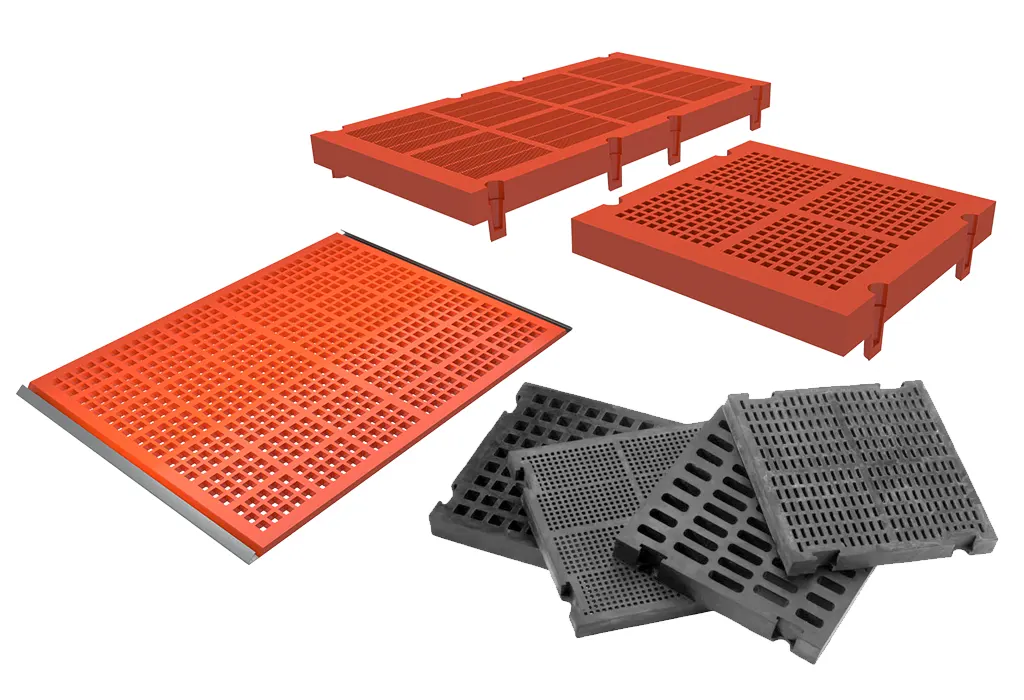
In North American coal preparation plants, these tiered systems utilize polyurethane modular panels on the lower decks to handle the 60% concentration of fine slurry. These synthetic panels provide a lower friction coefficient, which allows the water to carry the fines through the holes 25% faster than steel.
A 2025 pilot program in Nevada demonstrated that replacing a single-piece steel deck with modular polyurethane sections reduced noise levels by 10 decibels. This change also cut the physical labor time for screen replacement by 70%, as individual 1-foot panels weigh only 2kg.
Lighter components mean the vibrating motor consumes 5% less amperage to maintain the same G-force of 4.5. Over a full year of 24/7 operation, this energy reduction contributes to a significant decrease in the carbon footprint of the processing facility.
The mechanical integrity of the screen frame itself is also protected by the correct mesh tensioning system. Side-tensioned hooks that maintain a 15-ton pull force prevent the mesh from "flapping," a movement that causes 60% of all premature wire breakages in the mining industry.
-
Hook Type: C-hooks, U-hooks, or K-hooks designed for specific machine rails.
-
Tensioning Bolts: Grade 8 bolts required to sustain 1200+ vibration cycles per minute.
-
Protective Strips: Rubber capping prevents metal-on-metal friction that wears the underside of the mesh.
By isolating the mesh from the frame using rubber buffers, operators can extend the life of the vibrating machine’s side plates by 3 to 4 years. This maintenance-focused approach ensures that the most expensive parts of the separation circuit do not need replacement during the mine's primary lifespan.
Properly separated ore ultimately moves to the final concentrate piles with a moisture content of less than 10%. This dry consistency is achieved by the final dewatering deck, where high-frequency vibration and ultra-fine mesh work together to strip away the remaining process water.
Efficient water removal at this stage saves the mine approximately $0.80 per ton in transportation costs, as they are not paying to ship useless water to the smelter. The precision of the mesh at the end of the line is just as important as the heavy-duty scalping at the start, completing the cycle of efficient mineral processing.